


バルーンカテーテルの种类は何ですか?
-
 2022-10-25
-
LEPU


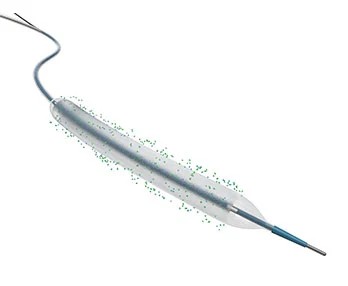
On January 16th, 1964, Dotter and Judkins performed the world's first lower limb vascular angioplasty on an elderly female patient using a balloon catheter. Thirteen years later, Gruentzig performed the world's first coronary angioplasty using a balloon catheter. Today, balloon dilation catheters are widely used for the diagnosis and treatment of cardiovascular diseases. Reviewing the development of balloon dilation catheter technology provides many insights for our current and future work. Next, let's take a look at the types of balloon catheters.
1.急速な交換バルーンカテーテル
The rapid exchange balloon dilation catheter is currently the most widely used type of balloon dilation catheter in percutaneous coronary intervention (PCI). The catheter has a side hole 25cm from the tip of the balloon, through which the guide wire is inserted and emerges from the side hole when it is inserted through the top of the balloon. This design greatly facilitates the operation of the operator and saves time. The structure of the rapid exchange balloon is also different from other types of balloons in that it includes a connection segment between the balloon and the push rod, occasionally leading to rupture. Both the balloon and guide wire are operated by one person, resulting in an ideal imaging effect. The disadvantage of this type of balloon catheter is that if the entire balloon system is not removed, the guide wire cannot be replaced. If an extension guide wire is not used, the OTW balloon cannot be replaced, and the push force is slightly reduced, and the tracking is slightly worse.
2.Over-the-wireバルーンカテーテル
The over-the-wire balloon dilation catheter (OTW) was first used in PTCA in 1982. It can be used for CTO lesions or when guide wire exchange is required, as well as for interventricular septal chemical ablation and central cavity pressure measurement and blood sampling. Currently, OTW balloons are rarely used clinically. The advantages of the OTW balloon dilation catheter include easy exchange of guide wires and good tracking. When the guide wire is difficult to pass through the occlusive lesion, the OTW balloon can provide additional support, similar to the role of a microcatheter. If the guide wire still cannot pass through the lesion, the OTW balloon dilation catheter can be used as a transmission catheter to exchange other guide wires. After the guide wire passes through the lesion, the OTW balloon dilation catheter can also be used for distal angiography to facilitate judging whether the guide wire is located in the true cavity. Therefore, the OTW balloon dilation catheter still has certain advantages in handling CTO lesions. The disadvantage of this type of balloon catheter is that the balloon size is slightly larger and the length of the steel wire is 300 cm, requiring cooperation between two operators.
3.固定ガイドワイヤーバルーンカテーテル
バルーン拡張カテーテルには、カテーテルの上部に長さ2 cmの柔軟なプラスチック製ガイドワイヤが固定されています。 一般的に使用されるバルーン拡張カテーテルの中で、外形が最も小さく、病変を横切る速度が速くなり、理想的な画像効果が得られ、操作に必要なのは1人だけです。 しかし、カテーテルが目標血管に入ると、カテーテルを両方向に回転させながら前方に押す必要があり、カテーテルが破損しやすくなります。 独立して移動することはできず、ガイドワイヤを交換することもできません。 それは基本的にもはや臨床的に使用されていません。
4.タイプの灌流バルーンカテーテル
灌流バルーン拡張カテーテルは、近位端と遠位端に複数の側穴があるため、バルーンを膨らませても、血流が病気の遠位端に入る可能性があります。
平均大動脈圧が80 mmHgの場合、遠位血流は依然として40〜60ミリリットル/分に達する可能性があります。 冠状動脈穿孔などの合併症を治療するために継続的なバルーン圧が必要な場合、灌流バルーン拡張カテーテルの使用には特定の利点があります。 主な欠点は、カテーテルが比較的厚く、病変を横切る能力が低いことです。
5.特殊なタイプのバルーンカテーテル
現在臨床現場で使用されている特殊なタイプのバルーンには、主にダブルワイヤバルーン、カッティングバルーン、薬剤溶出バルーンなどが含まれます。基本的に、これらの3種類のバルーンは急速交換バルーン拡張カテーテルに属しますが、従来とは異なる特別な機能があります。急速交換バルーン。
ダブルワイヤーバルーンの外径は通常のバルーンの外径と同様であり、バルーンの端部にワイヤ形状を案内するための内腔がある。 さらに、バルーンの表面には、ガイドワイヤからバルーンの両側に180 ° の位置に固定されたワイヤがある。
ダブルワイヤーバルーンは、内皮への損傷を最小限に抑え、バルーンが移動しないように、定期的にプラーク組織を切断できます。 カッティングバルーンは、マイクロカッティング技術とバルーンの拡張を組み合わせた製品です。 現在臨床的に使用されているカッティングバルーンは、通過性が高く、圧力を下げて完全に拡張でき、血管内膜の不規則な引き裂き率が低く、長期的には再狭窄率が低い第3世代の製品です。
薬剤溶出バルーンは、従来のバルーン拡張技術と薬剤溶出技術を組み合わせた製品であり、ステント留置術の効果的なサプリメントとして徐々にその優位性を示しています。 薬剤溶出バルーンは、金属ステントやポリマーキャリアによって引き起こされる副作用を回避でき、病気の血管壁の特定の領域に薬剤を適用して再狭窄を制御できます。