


健康で強い心が欲しいですか? 体重を減らし、今から栄養を保つようにしてください!
-
 2021-06-18
-
LEPU



過去数回のデカントで、アジアの急速な都市化と工業化により、この地域、特に低中所得国の若年成人の肥満率が上昇しました。 Obesity is a known risk factor for cardiovascular disease and heart failure. Although obese people are normally defined as having a BMI greater or equal to 30 by WHO, it's highly heterogeneous.
In metabolically unhealthy individuals, obesity coexists with a variety of comorbidities, such as hypertension, diabetes, dyslipidemia, and sleep apnea, which seriously affects the health of the heart and all other organs of the body, including cardiac remodeling, myocardial dysfunction, ejection fraction retention HF, and coronary artery disease. Malnutrition, on the other hand, refers to any nutritional imbalance that leads to undernourishment or over-nourishment. WHO stresses that the "double burden of malnutrition" - characterized by undernourished people and those who are obese or suffering from diet-related non-communicable diseases - is a real and growing global health challenge.
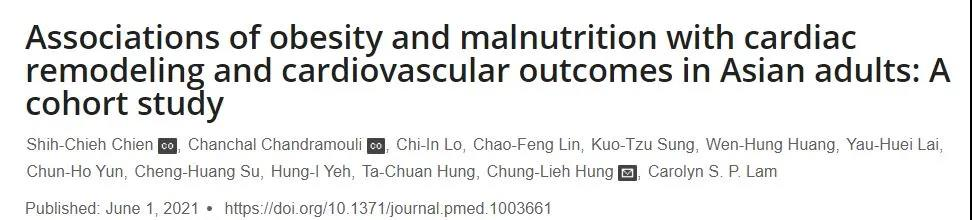
Serum albumin (SA) and prognostic nutrition index (PNI) are proxies of nutritional status and have been shown to have prognostic effects on multiple CVDS outcomes, especially HF(Heart Failure). The researchers studied 5,300 asymptomatic Asian participants (mean age 49.6±11.4 years; 64.8% were male) who were continuously enrolled in a cardiovascular health screening program between June 2009 and December 2012. Clinical and echocardiographic characteristics of the participants were described and stratified by a comprehensive subgroup of obesity and nutritional status. Obesity was based on the Asian BMI dividing line recommended by WHO (low ≤25 kg/m2; High & gt; 25 kg/m2). Nutritional status is defined primarily by the SA, followed by the PNI and Global Malnutrition Leadership Initiative (GLIM) standards.

The final cohort consisted of 2096 (39.0%) lean -- well nourished (low BMI, high SA), 1369 (25.8%) obese -- well nourished (high BMI, high SA), and 1154 (21.8%) lean -- ill nourished (low BMI, low SA), And 681 participants (12.8%) who were obesity-undernourished (high BMI, low SA). Compared with all other subgroups, the obesity-malnourish participants were older on average (54.5±11.4 years), more of them are women (41%), had a higher mean waist circumfeRence (91.7±8.8cm) and the highest percentage of body fat (32%), and had the highest incidence of hypertension (32%), diabetes (12%), and CVD (11%).
人々の心臓の転帰に対する肥満と栄養失調の複合的な影響に関する研究は不足しています。 To investigate the relationship between obesity and nutritional status and clinical characteristics, echocardiographic changes, and clinical outcomes in the general community, e台湾の集中治療室からのxperts PLoS Medicineの最新号に掲載された研究を実施しました。 At a median follow-up of 3.6 years, the lean-well-nourished group, as a refeRence, had the highest overall disease risk, followed by the lean-well-nourished group and the obesity-well-nourished group. The results were similar when other anthropometric indices (waist circumfeRence and body fat) and other measures of nutritional status (the PNI and GLIM criteria) were used.
In summary, obese individuals with poor nutritional status have the highest burden of heart complications and the most adverse overall outcomes. To have a healthy heart, try to be a well-nourished thin 人!
LepuのCardiovasculorsolutionsを探索する:https://en.lepumedical.com/products/cardiovascular-products/
RefeRence:Associations of obesity and malnutrition with cardiac remodeling and cardiovascular outcomes in Asian adults: A cohort study. https://doi.org/10.1371/journal.pmed.1003661